

Festive Lights Publishes Guidance on Limiting Light Pollution from Decorative Garden Lighting
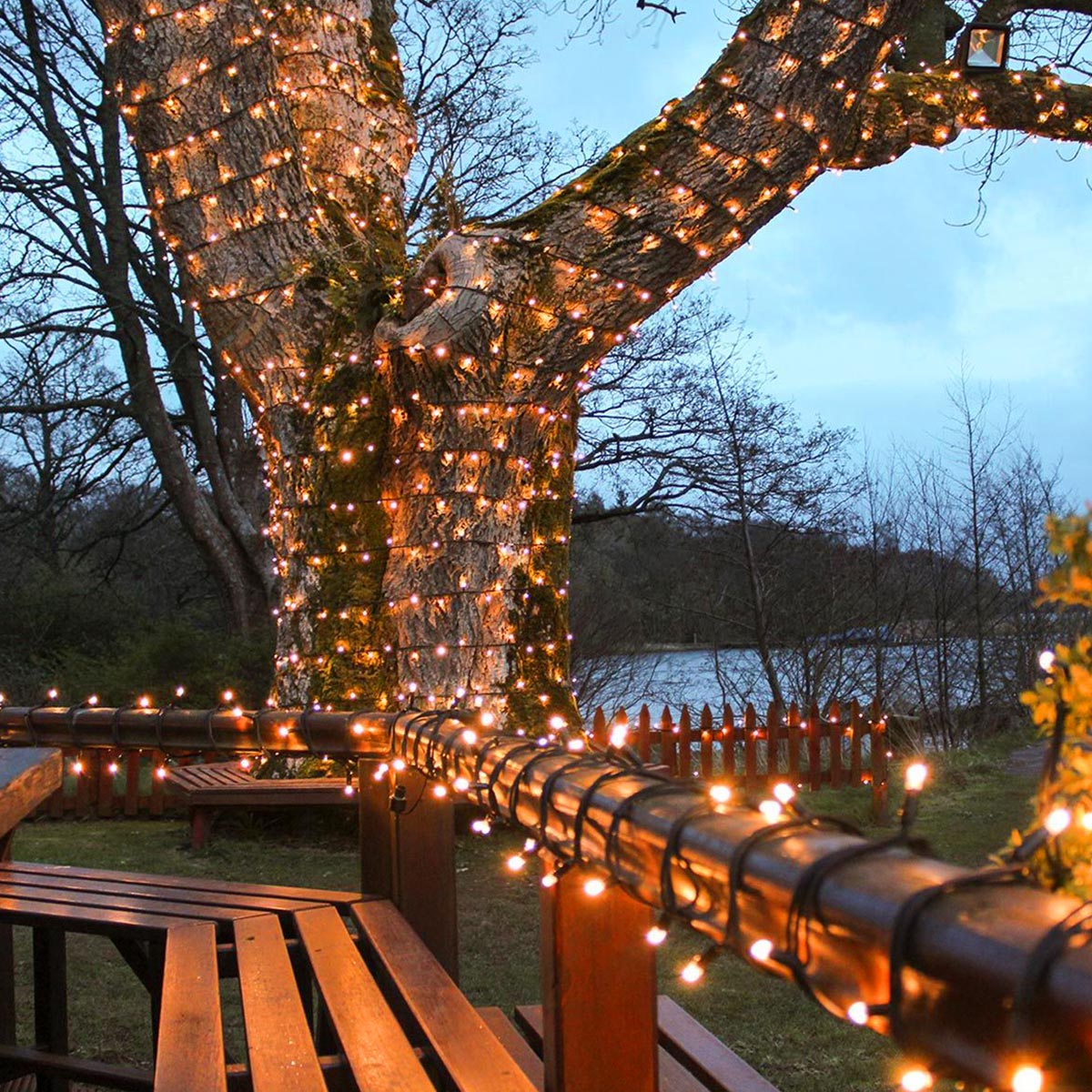
ConnectPro New Vintage Warm White Colour
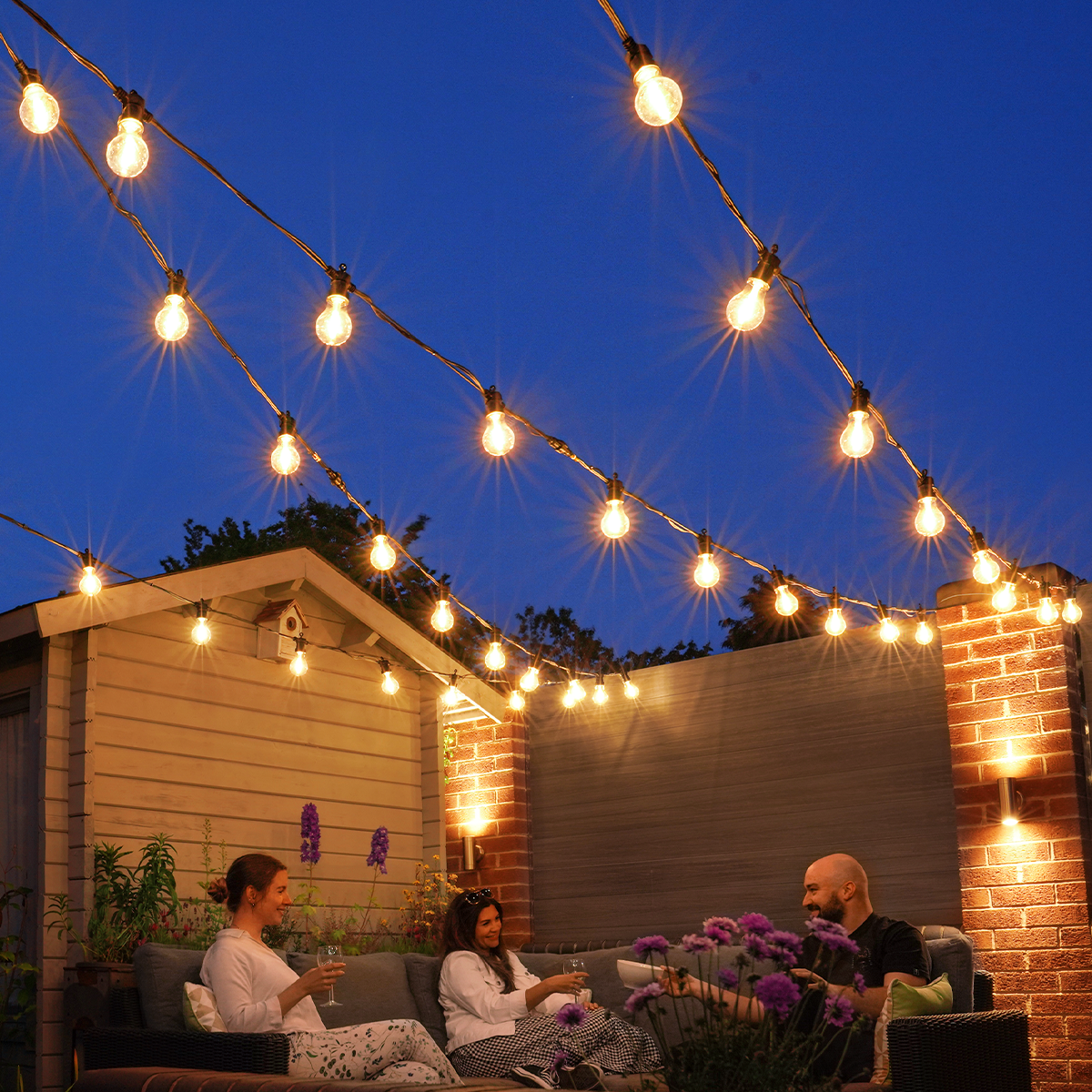
Cozy outdoor patio with warm festoon lights and people relaxing at dusk.

An overview from the supplier sets out how households can enjoy outdoor lighting while reducing its effects on the night sky, wildlife and neighbours.
CHORLEY, CHARNAROCK RICHARD, UNITED KINGDOM, September 7, 2026 /EINPresswire.com/ -- Festive Lights, a United Kingdom-based supplier of domestic and commercial decorative lighting, has published an overview of responsible outdoor lighting practices, setting out how households can limit the light pollution associated with decorative garden lighting. The assessment draws on established international guidance and United Kingdom regulation to describe practical measures, including the selection of warm colour temperatures, the use of timers and motion sensors, and correct positioning, through which decorative illumination can be enjoyed with reduced impact on wildlife, neighbours and the visibility of the night sky.The overview responds to a period in which domestic outdoor lighting has expanded considerably. Falling hardware costs, the wide availability of low-voltage and solar systems, and the growing use of gardens as extensions of interior living space have increased both the quantity of lighting installed at residential properties and the hours for which it operates. In parallel, awareness of light pollution has risen, supported by research into its effects on ecosystems and by the guidance of bodies concerned with the protection of dark skies.
Light Pollution as a Recognised Environmental Issue
Light pollution is generally defined as the inappropriate or excessive use of artificial light, including light directed where it is neither needed nor wanted. Its recognised effects include skyglow, the brightening of the night sky over populated areas; light trespass, in which light spills beyond its intended target onto neighbouring property; and glare from excessively bright sources. Guidance from the United Kingdom government identifies artificial light as a potential source of annoyance to people, a hazard to wildlife, and a factor that can undermine enjoyment of the countryside and the night sky.
The scale of the change in the nocturnal environment has been documented by organisations that monitor sky brightness, which report that a substantial proportion of the population is unable to observe more than a small number of stars from residential areas. Bodies including the Campaign to Protect Rural England and the Institution of Lighting Professionals have contributed to policy discussion on the subject, and government departments coordinate policy on artificial light across planning, environmental and highways functions.
The Five Principles of Responsible Outdoor Lighting
Much of the practical guidance in the overview follows the Five Principles for Responsible Outdoor Lighting, a framework developed by DarkSky International, formerly the International Dark-Sky Association, in conjunction with the Illuminating Engineering Society. The principles are intended to allow outdoor lighting to serve its purpose while limiting unnecessary impact, and they translate readily to a domestic garden setting.
The first principle holds that all light should have a clear purpose, and that a fixture which serves no identifiable function is a candidate for removal. The second requires that light be directed only where it is needed, through shielding and careful aiming that keeps the beam pointing downward and prevents spill beyond the intended area. The third specifies that light should be no brighter than necessary, using the minimum level required for the task. The fourth calls for lighting to be controlled, so that it operates only when required, through timers, motion sensors and dimming. The fifth addresses colour, recommending warm-toned light and advising against cooler, blue-rich sources.
"The principles are straightforward, and most of them cost nothing to apply," said Jana Dalton, a specialist in exterior lighting at Festive Lights. "A great deal of light pollution comes from fixtures that are brighter than they need to be, left on when nobody is present, or aimed in a way that sends light outward and upward rather than down onto the area being used. Addressing those three points, brightness, control and direction, accounts for most of the improvement a household can make, and none of it requires giving up decorative lighting."
Colour Temperature and the Case for Warm Light
Among the specific technical recommendations, the overview gives particular attention to colour temperature, expressed as a correlated colour temperature (CCT) in kelvin. Guidance from dark-sky organisations recommends warm-toned light for outdoor use, with a correlated colour temperature not exceeding 3000K, and warmer values of 2700K or below preferred, particularly in locations near wildlife. Cooler sources, such as those rated at 4000K or above, emit a greater proportion of blue light, which contributes disproportionately to skyglow and has been associated with stronger effects on both wildlife and human sleep patterns.
The recommendation aligns with the character of most decorative garden lighting, which favours warm white tones for their ambience. Festive Lights notes that warm white, typically rated between 2200K and 2700K, is the dominant colour temperature across decorative festoon, string and fairy lighting, meaning that the aesthetic preference already common in domestic gardens coincides with the guidance for responsible outdoor lighting. Where colour-changing systems are used, the same systems can generally be set to warmer tones for everyday operation.
Controls: Timers, Motion Sensors and Dusk-to-Dawn Operation
The principle of controlled lighting has a direct bearing on how long a garden remains illuminated and, consequently, on its cumulative effect. The overview identifies three widely available control mechanisms. Timers switch lighting off after a set period, preventing installations from operating throughout the night when they serve no purpose. Passive infrared (PIR) motion sensors activate lighting only when movement is detected, which is particularly suited to functional and security lighting that need not remain continuously lit. Dusk-to-dawn photocells, by contrast, activate lighting at nightfall, and the overview notes that these are best combined with a timer or curfew so that decorative lighting does not run unnecessarily into the early hours.
"The most effective single change for many households is simply reducing the hours a light is on," said Stephen Alty, General Manager at Festive Lights. "A decorative display that runs from dusk until it is switched off before bed has a very different effect from one left burning until dawn every night. Timers and sensors make that control automatic, so responsible operation does not depend on somebody remembering to turn the lights off."
Positioning, Shielding and Brightness
Correct positioning is presented as a further means of limiting impact without reducing the decorative value of an installation. Directing light downward, using shielded fixtures where appropriate, and aiming fittings away from boundaries and windows reduces both light trespass onto neighbouring property and light escaping upward into the sky. Low-level path and border lighting, which casts light onto the ground where it is required, is identified as inherently less prone to spill than elevated or upward-facing fixtures.
Brightness is addressed as a matter of proportion. The overview observes that decorative lighting rarely requires the intensity associated with functional floodlighting, and that layering several low-output fixtures generally produces a more even and comfortable result than a single bright source, while emitting less stray light. The guidance to use the minimum level necessary applies to decorative as much as to functional lighting.
Effects on Wildlife
The overview summarises the documented effects of artificial light on wildlife, an area in which United Kingdom research institutions have contributed substantial evidence. The UK Centre for Ecology and Hydrology has described how excess light can fragment usable habitat for animals, birds, insects and plants, affecting their behaviour and physiology, and has identified it as a contributing factor in the decline of insect and bird populations. Insects are drawn to artificial light in ways that disrupt feeding and reproduction, with consequences that extend through the food chain.
Bats are among the species most affected, and the overview notes findings from the Natural History Museum and conservation bodies indicating that many bat species avoid illuminated areas, that lighting near roost exits can delay emergence and reduce feeding time, and that some species alter their flight routes to avoid lit ground. Birds can experience disrupted daily rhythms and extended activity periods under artificial light, and migrating birds can be disoriented by it. Guidance from the Bat Conservation Trust and from government agencies is available for households near protected sites or species, where additional care is advised.
The overview emphasises that these effects are influenced by the same factors the Five Principles address, namely the brightness, colour, direction and duration of lighting, and that warm, shielded, controlled lighting reduces the impact accordingly.
Neighbours and the Statutory Position
The overview also sets out the regulatory context in the United Kingdom, where artificial light can, in certain circumstances, constitute a statutory nuisance. The Clean Neighbourhoods and Environment Act 2005 amended the Environmental Protection Act 1990 to bring artificial light from premises within the statutory nuisance regime from April 2006. For light to be treated as a statutory nuisance, it must unreasonably and substantially interfere with the use of a property or be prejudicial to health, and certain premises, including airports, harbours and some sports facilities, are exempt. Local authorities have a duty to investigate complaints and may issue an abatement notice where a nuisance is established.
Guidance issued by local authorities consistently advises that a resident affected by a neighbour's lighting raise the matter directly in the first instance, since many issues arise from fixtures the owner has not realised are intrusive and can be resolved by simple adjustment or re-aiming. The overview presents responsible lighting practice as a means of avoiding such disputes, noting that the measures that reduce ecological impact, principally shielding, correct aiming and controlled operation, are also those that prevent light trespass onto neighbouring property.
A Balanced Position and Outlook
The overview does not advocate the removal of decorative or functional outdoor lighting, and it acknowledges the legitimate purposes that lighting serves, including safety, security and the enjoyment of outdoor space. Its stated aim is to reconcile those purposes with reduced environmental impact through informed specification and operation, rather than to discourage outdoor lighting as such.
Commentary from the lighting sector indicates a continued movement towards warm colour temperatures, integrated controls and shielded designs as standard features, supported by certification schemes such as the DarkSky Approved programme, which recognises luminaires meeting defined criteria. Festive Lights states that its overview is intended to help households apply established guidance to everyday decorative lighting, so that the growth in domestic outdoor illumination need not entail a proportionate increase in light pollution.
About Festive Lights
Festive Lights is a United Kingdom-based supplier of exterior and interior decorative lighting, focusing on the distribution of connectable LED string and festoon systems, solar-powered fixtures, battery-operated lighting, application-controlled smart lighting and motion-sensor units for residential and commercial use. The company supplies both consumers and professional installers and manufactures its ranges to defined weatherproofing standards. Established for over two decades and based in Charnock Richard, Chorley, the organisation maintains an emphasis on product durability, weatherproofing certification and accessible installation.
Jana Dalton
Festive Lights
1257792111 ext.
email us here
Visit us on social media:
LinkedIn
Instagram
Facebook
YouTube
TikTok
X
Other
Legal Disclaimer:
EIN Presswire provides this news content "as is" without warranty of any kind. We do not accept any responsibility or liability for the accuracy, content, images, videos, licenses, completeness, legality, or reliability of the information contained in this article. If you have any complaints or copyright issues related to this article, kindly contact the author above.
